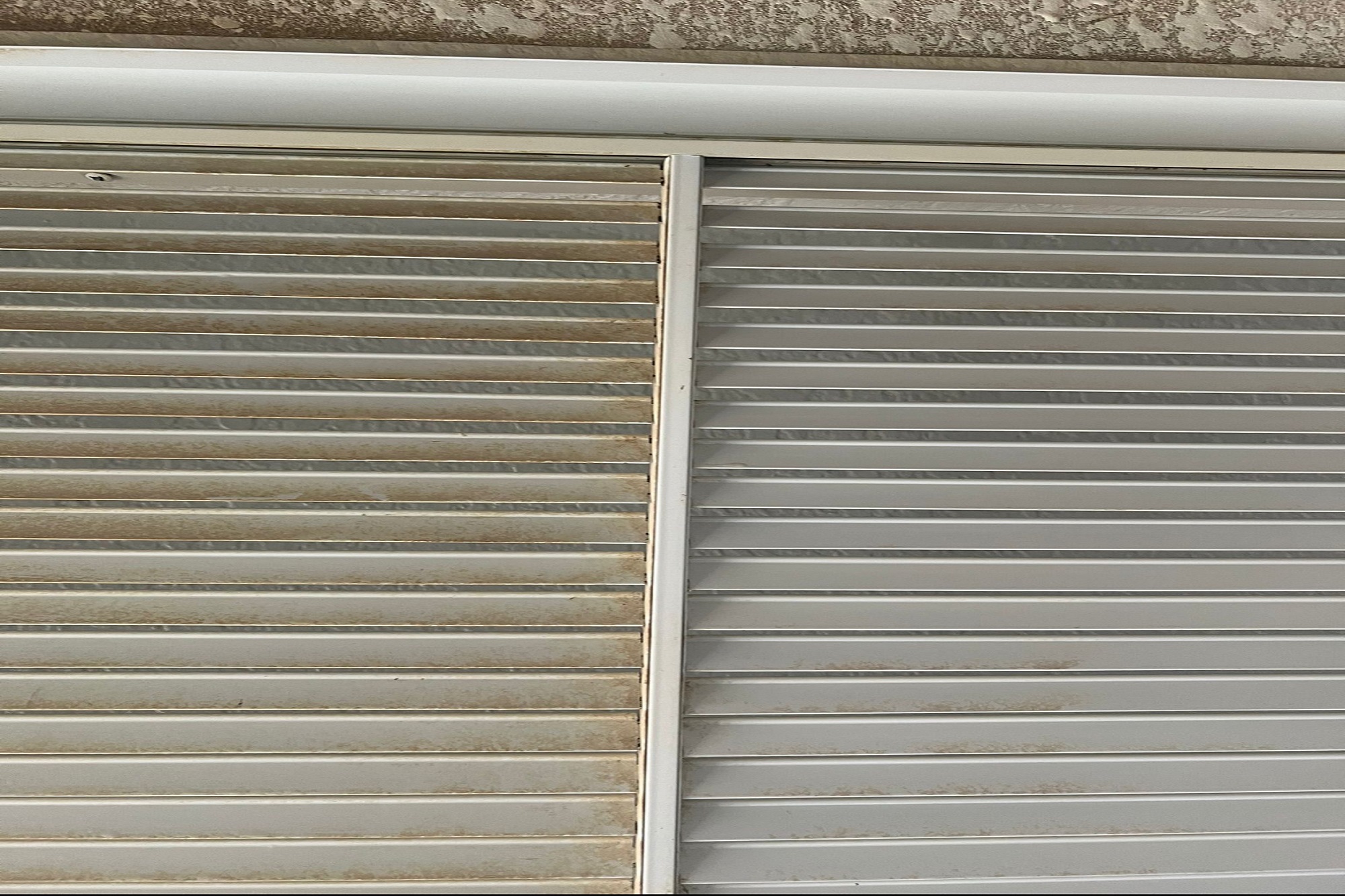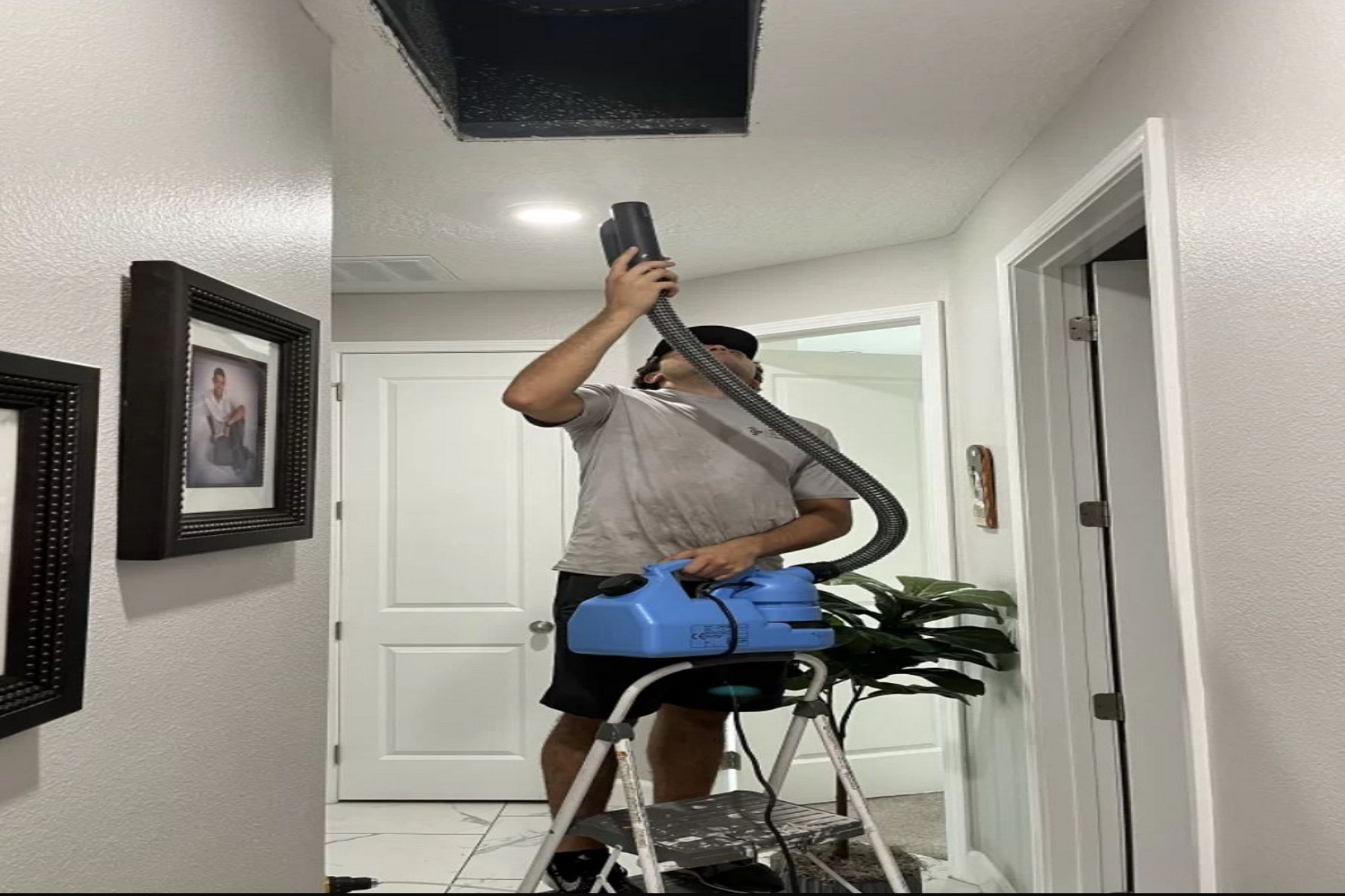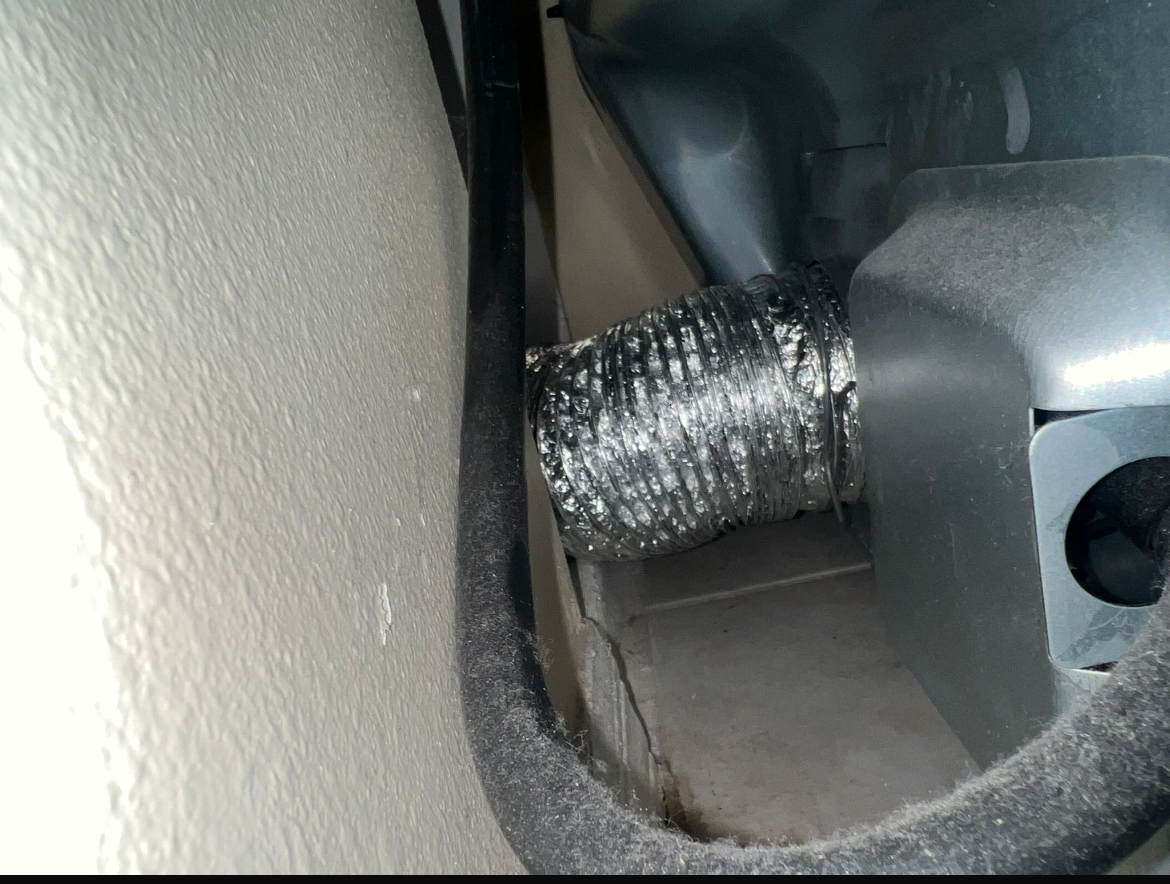
If you’ve ever wondered how to tell if your dryer vent is clogged, the honest answer is that your dryer has probably been telling you for weeks — you just haven’t been listening. A clogged vent doesn’t usually announce itself with a loud bang or a warning light. It shows up as small annoyances that build slowly: an extra cycle here, a warm laundry room there, until one day the dryer barely gets your towels dry at all. We see this pattern constantly across Palm Beach, Martin, and St. Lucie counties, especially in homes where the dryer runs several loads a day for a busy family.
Start the Timer on Your Next Load
The single most reliable diagnostic test doesn’t require tools or a ladder — just a clock. Throw in a normal-sized load of towels or jeans and time how long it takes to dry completely on a standard cycle.
- Under 45-50 minutes for a full load: your airflow is likely fine.
- 60-90 minutes, or the “more dry” cycle keeps kicking in automatically: that’s a yellow flag.
- Two full cycles and clothes still come out damp or oddly hot: that’s a strong sign of restricted airflow, and it’s worth checking further.
Dryers are designed to push hot, moist air out of the house in a matter of minutes per load. When lint builds up inside the vent duct — not just the lint trap, but the actual tube running from the dryer to the outside wall or roof — that moist air has nowhere to go. It recirculates inside the drum, and your dryer just keeps running, burning energy without actually finishing the job.
Feel the Dryer, Feel the Room
While that load is running, put your hand on a few spots and pay attention to what you feel.
- The front panel or top of the dryer: a little warmth is normal. Hot to the touch, or hot enough that it feels uncomfortable to leave your hand there, is not.
- The laundry room air itself: does it feel noticeably more humid or warmer than the rest of the house by the time the cycle ends? Trapped exhaust has to go somewhere, and often it’s leaking back into the room around the door or the vent connection instead of leaving the house.
- The back of the dryer where the duct connects: if you can safely check, feel along the flexible or rigid ductwork for excess heat. A duct that’s noticeably hotter near the dryer than it is a few feet along its run can indicate lint packed in that section.
None of this requires special equipment. It’s really just paying attention to what your senses are already picking up during a normal wash day.
Don’t Ignore a Burning or “Hot Dust” Smell
This is the sign we tell homeowners never to brush off. A faint burning smell, or an odor that reminds you of hot dust on a heater coil, usually means lint sitting somewhere near the heating element is getting hot enough to singe. It’s a well-known cause of home dryer fires, which is exactly why this particular symptom deserves more urgency than “eh, I’ll deal with it next month.”
If you smell this even once, that’s your cue to stop using the dryer until the vent has been checked. It’s a much cheaper problem to solve with a cleaning than with a service call for a scorched heating element — or worse.
Go Outside and Check the Vent Flap
This is the step most people skip simply because they don’t know it exists. Every dryer vent exits somewhere — a wall vent near the foundation, or in a lot of South Florida homes, a roof-mounted vent cap. That exterior vent has a flap or louver designed to swing open when the dryer is exhausting air, then close when it’s not running.
Start a load, then walk outside and find the vent while the dryer is on the heat cycle:
- Flap swings open and you feel a strong, steady rush of warm air: good sign, your line is clear.
- Flap barely moves, or you feel only a weak puff of air: that’s a fairly clear indicator of a clog somewhere between the dryer and the exterior termination.
- Flap doesn’t move at all, or you see lint caked around the outside opening: the duct is likely significantly restricted.
Roof-mounted vents are worth mentioning specifically, because they’re common on homes throughout our service area and they’re impossible to inspect safely from the ground. If your dryer vent terminates on the roof rather than an exterior wall, you generally can’t do this check yourself — which is exactly the kind of situation where a second set of hands and the right equipment matters.
Putting the Signs Together
Any single symptom on its own might mean nothing — an unusually large load can run long, and laundry rooms get warm sometimes. But when you start stacking two or three of these together — longer dry times, a hot dryer exterior, that faint burning smell, a vent flap that won’t budge — that’s no longer a coincidence. That’s a dryer vent asking for attention.
The good news is that this is one of the more straightforward home maintenance issues to fix once you know to look for it. A clogged duct doesn’t fix itself, and it typically gets worse rather than better, since lint tends to attract more lint the longer it sits.
If you’ve run through this checklist and you’re seeing more than one warning sign, don’t wait for it to turn into a bigger problem. Clean Quality Air handles residential and commercial dryer vent cleaning throughout Boynton Beach, West Palm Beach, Palm Beach Gardens, Jupiter, Hobe Sound, Stuart, Port St Lucie, Fort Pierce, and Vero Beach — including the roof-mounted vents that are tough to inspect on your own. Give us a call at (772) 834-9618 or request a free quote, and we’ll get your airflow back where it should be.