We regularly get calls from homeowners who say some version of the same thing: “The last company just looked in the vents with a flashlight and told me everything was fine.” That’s an inspection. It is not a cleaning, and the difference between duct inspection vs duct cleaning trips up more South Florida homeowners than you’d think. Both services matter. They just aren’t interchangeable, and knowing which one you’re actually paying for can save you from a nasty surprise a few years down the road.
What an Inspection Actually Checks For
A duct inspection is a diagnostic step. A technician looks at accessible sections of your ductwork, checks your registers and return vents, and gets a general read on airflow and visible condition. On a system that’s relatively new or was recently cleaned, an inspection might be all you need to confirm things are still in decent shape.
Here’s what an inspection is genuinely good at:
- Spotting obvious problems early — disconnected sections, crushed flex duct, visible mold near a supply register, or a dryer vent that’s clearly restricted
- Giving you a baseline reading on airflow at each vent
- Catching issues before they turn into bigger repairs, like a duct that’s come loose in the attic and is dumping conditioned air into an unconditioned space
- Helping you decide whether a full cleaning is actually needed right now or can wait
What it can’t do is remove anything. A flashlight and a visual pass tell you there’s buildup in the ductwork — they don’t get it out.
What a Full Cleaning Involves
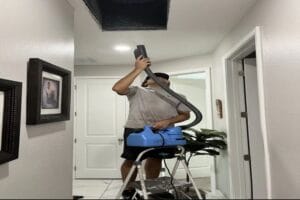
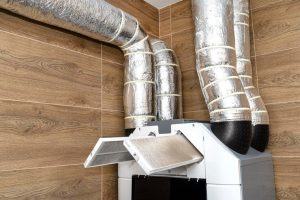
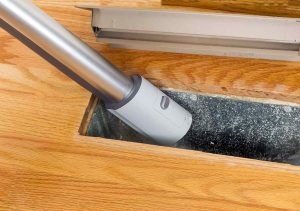
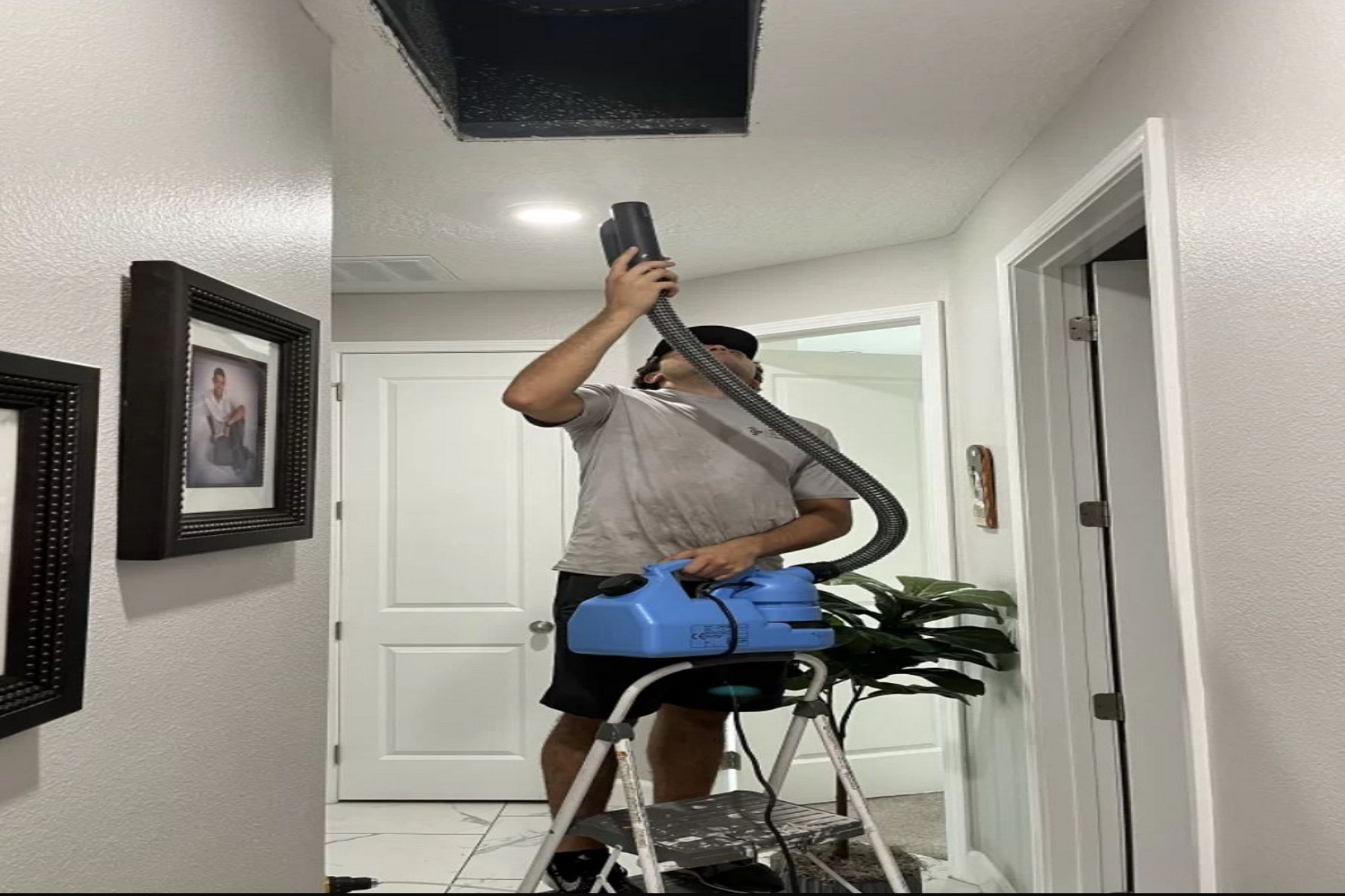
A professional cleaning is a physical, mechanical process. It’s designed to dislodge and remove the dust, debris, and contaminants that have built up on the interior walls of your duct system over months or years — not just glance at them. That typically means specialized equipment working through the full run of ductwork, supply and return sides, to agitate and extract material that’s accumulated where a visual inspection simply can’t reach.
This is the part of duct inspection vs duct cleaning that surprises people most: a system can look “fine” through a register and still have a meaningful layer of dust and debris coating the inside of the duct runs themselves. You’re not going to see that with a flashlight from the room. You need equipment built to physically get in there and pull it out.
Where This Matters Most in Our Service Area
We work across Boynton Beach, West Palm Beach, Palm Beach Gardens, Jupiter, Hobe Sound, Stuart, Port St Lucie, Fort Pierce, and Vero Beach — basically the whole Treasure Coast and Palm Beach County corridor. Humidity is the common thread across all of it. High humidity plus air conditioning that runs nearly year-round creates conditions where dust, pollen, and moisture-related buildup accumulate inside ductwork faster than they would in a drier climate. An inspection might tell you there’s a problem starting. Only a cleaning actually resolves it.
Why Homeowners Mix the Two Up
Part of the confusion is that some companies market a basic look-through as if it’s a full service — a five-minute visual check gets billed or advertised in a way that sounds more comprehensive than it is. That’s not necessarily dishonest, but it does leave homeowners thinking their ducts have been “done” when really they’ve only been looked at.
The other part is that both jobs use some of the same access points — your registers, returns, and sometimes the attic or crawl space. Because the entry points look the same, it’s easy to assume the work behind them is the same too. It isn’t. One is diagnostic. The other is corrective.
So Which One Do You Actually Need?
In practice, most homes benefit from thinking of these as sequential steps rather than competing options:
- If it’s been a long time since anyone has looked at your ductwork — or you’ve never had it inspected — start with an inspection to understand what you’re dealing with.
- If you’ve noticed dust settling faster than usual, musty odors when the AC kicks on, or reduced airflow at certain vents — those are signs pointing toward a cleaning, not just another look.
- After a home renovation, pest issue, or water intrusion — a cleaning is usually the right call regardless of what an inspection shows, since construction dust and debris settle directly into duct runs.
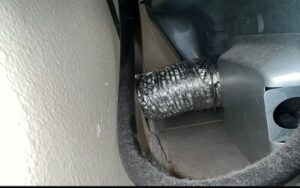
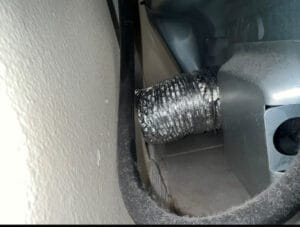
- For dryer vents specifically — including roof-mounted dryer vents, which are common in parts of our service area — a visual check from inside the laundry room tells you very little about what’s happening in the vent run itself. A clogged dryer vent is a well-known cause of home dryer fires, and lint buildup inside the vent isn’t something you can eyeball from the dryer’s exterior panel.
If you’re not sure which category your home falls into, that’s a reasonable thing to ask about rather than guess at.
Getting an Honest Answer for Your Home
We’re a family-owned business, and we’d rather tell a homeowner “your system looks fine, you don’t need a full cleaning yet” than sell a service that isn’t necessary. That’s really the value of understanding duct inspection vs duct cleaning as two distinct steps — it means you’re only paying for what your ductwork actually needs, not a one-size-fits-all package.
If it’s been a while since anyone has taken a real look at your air ducts or dryer vents — residential or commercial, anywhere from Boynton Beach up through Vero Beach — give us a call at (772) 834-9618 or request a free quote from Clean Quality Air. We’ll tell you straight whether you need a look, a full cleaning, or both.