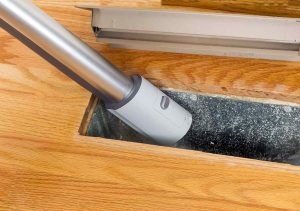

If someone in your house reaches for an inhaler more often indoors than outdoors, your ductwork is worth a second look. Asthma triggers in air ducts are easy to overlook because you can’t see inside the system — but every time your AC cycles on, whatever has settled in those metal or flex-duct runs gets pushed right back into the rooms you breathe in. In humid South Florida homes, where air conditioning runs almost constantly, that cycle happens dozens of times a day.
We’re not doctors, and this isn’t medical advice — if you or a family member has diagnosed asthma, your allergist is the right person to guide treatment. What we do know, from years of pulling debris out of ductwork across Palm Beach, Martin, and St. Lucie counties, is what tends to build up inside a duct system over time and why it matters for anyone with sensitive airways.
What Actually Collects Inside a Duct System
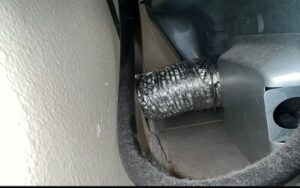
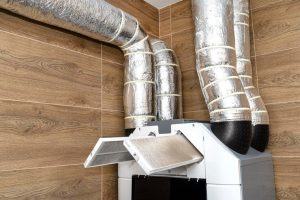
Ductwork isn’t a sealed, sterile tube. It’s a long, dark, often slightly damp pathway that pulls in whatever is floating around your home’s air — and South Florida’s humidity gives a few unwanted guests exactly the conditions they like.
- Dust mites: These microscopic organisms feed on shed skin cells and thrive in warm, humid environments. Duct interiors, especially near the coil and drip areas, can hold onto mite debris and droppings, which are a well-documented asthma and allergy trigger.
- Pet dander: Even in homes without pets, dander can travel in on clothing and settle in the return air ducts, where it gets recirculated continuously.
- Mold spores: Condensation around the air handler or coil creates a damp environment. If moisture lingers, mold can take hold inside the ductwork itself and release spores every time air moves through the system.
- Fine dust and pollen: Regular household dust and outdoor pollen that enters through windows, doors, or a less-than-perfect filter can build up along duct walls over months and years.
None of this happens overnight. It’s a slow accumulation — which is exactly why it’s easy to miss until someone in the house starts noticing more frequent symptoms.
Why Air Ducts Are a Bigger Deal Than Dusting Your Shelves
You can wipe a shelf, vacuum a rug, or wash bedding to reduce dust mites and dander on surfaces. Your air ducts don’t get that same routine attention, yet they touch every cubic foot of air that moves through your home. A central AC or heating system typically cycles the entire volume of air in a house multiple times per day. If the ducts themselves are holding onto allergens, that air picks up more contaminants on its way out of the vents than it had on the way in.
That’s part of why these symptoms can be so persistent — you can do everything right with surface cleaning and still not see improvement, because the delivery system for your indoor air is the actual source.
Signs Your Ducts Might Be Contributing to Symptoms
There’s no single definitive sign, but a few patterns are worth paying attention to:
- Symptoms that ease up when you’re away from home but return once you’re back
- A musty or stale smell when the AC first kicks on
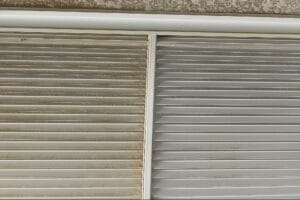
- Visible dust blowing from vents onto nearby surfaces
- Household members with asthma or allergies who seem to react more at certain times of day tied to the AC cycling
- A noticeably dusty return air grille, even shortly after cleaning
If several of these sound familiar, it doesn’t confirm your ducts are the cause — but it’s a reasonable enough signal to have the system looked at rather than guessing.
What Duct Cleaning Can (and Can’t) Do
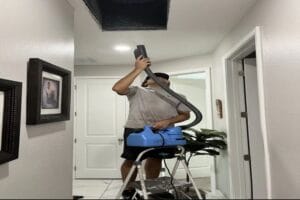
Duct cleaning removes accumulated dust, debris, dander, and mold growth from inside the supply and return lines, the vent covers, and the components of the system that air actually passes through. For a household managing airborne allergens, that removal can meaningfully reduce what’s being recirculated.
What it won’t do is replace medical treatment or eliminate every allergen source in a home — pets, carpets, and outdoor air still play a role. Think of it as addressing one piece of the puzzle: the part of your home’s air system that’s easy to forget about because it’s hidden behind drywall and vent covers. It’s also worth cleaning vent covers themselves, since visible dust buildup there is often a smaller reflection of what’s happening further back in the line.
A Regional Note: Why This Matters More Here
Homes across Boynton Beach, West Palm Beach, Palm Beach Gardens, Jupiter, Stuart, Port St Lucie, Fort Pierce, and Vero Beach deal with a specific combination of near-constant AC use and high ambient humidity. That combination is exactly what allows mold and dust mites to establish themselves inside ductwork rather than just passing through. Homes in drier climates with less AC runtime simply don’t create the same conditions inside their duct systems.
If it’s been a few years since anyone has looked inside your ducts — or you honestly can’t remember the last time — that alone is reason enough to get it checked, especially with asthma or allergies in the household.
Getting a Straight Answer About Your System
Clean Quality Air is a family-owned business serving the Treasure Coast and Palm Beach County, and we’ve seen firsthand how much buildup can hide inside a system that looks fine from the outside. We serve homes and businesses throughout Boynton Beach, West Palm Beach, Palm Beach Gardens, Jupiter, Hobe Sound, Stuart, Port St Lucie, Fort Pierce, and Vero Beach.
If you’re dealing with unexplained respiratory symptoms at home and want to rule out your ductwork as a contributing factor, give us a call at (772) 834-9618 or request a free quote. We’ll take a look at what’s actually going on inside your system before recommending anything.